
Guest post by Leah Brinch-Iversen
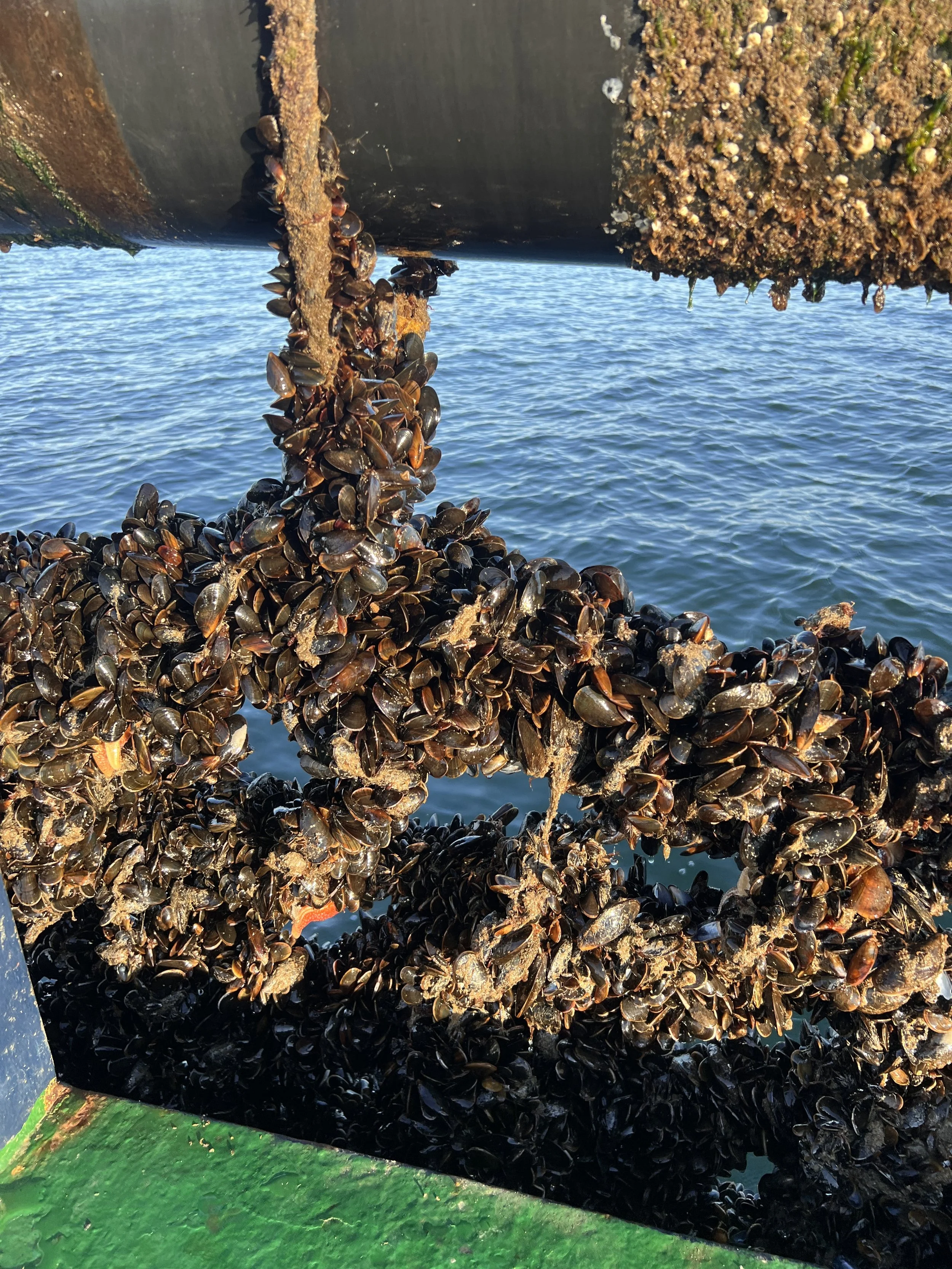
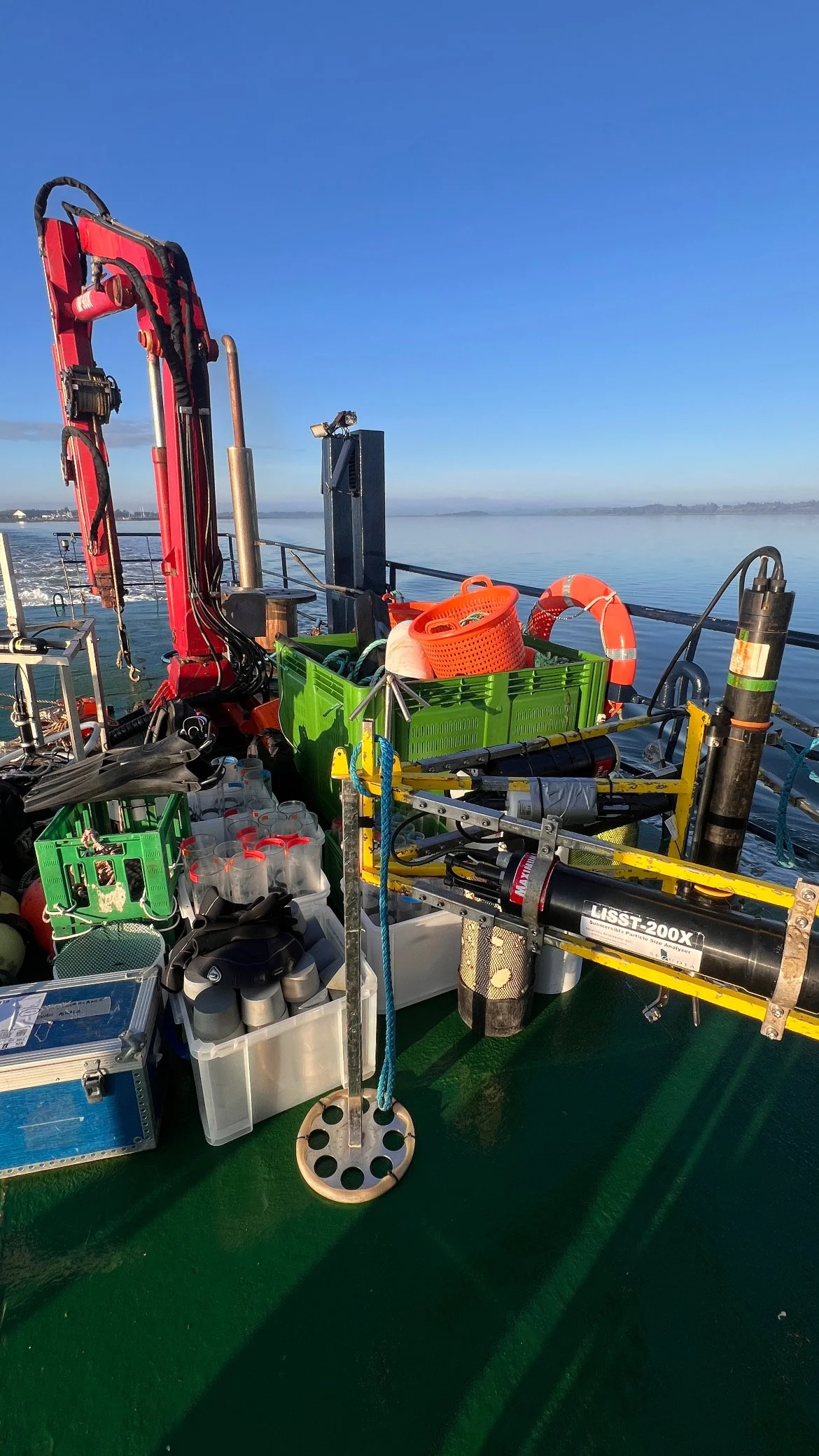
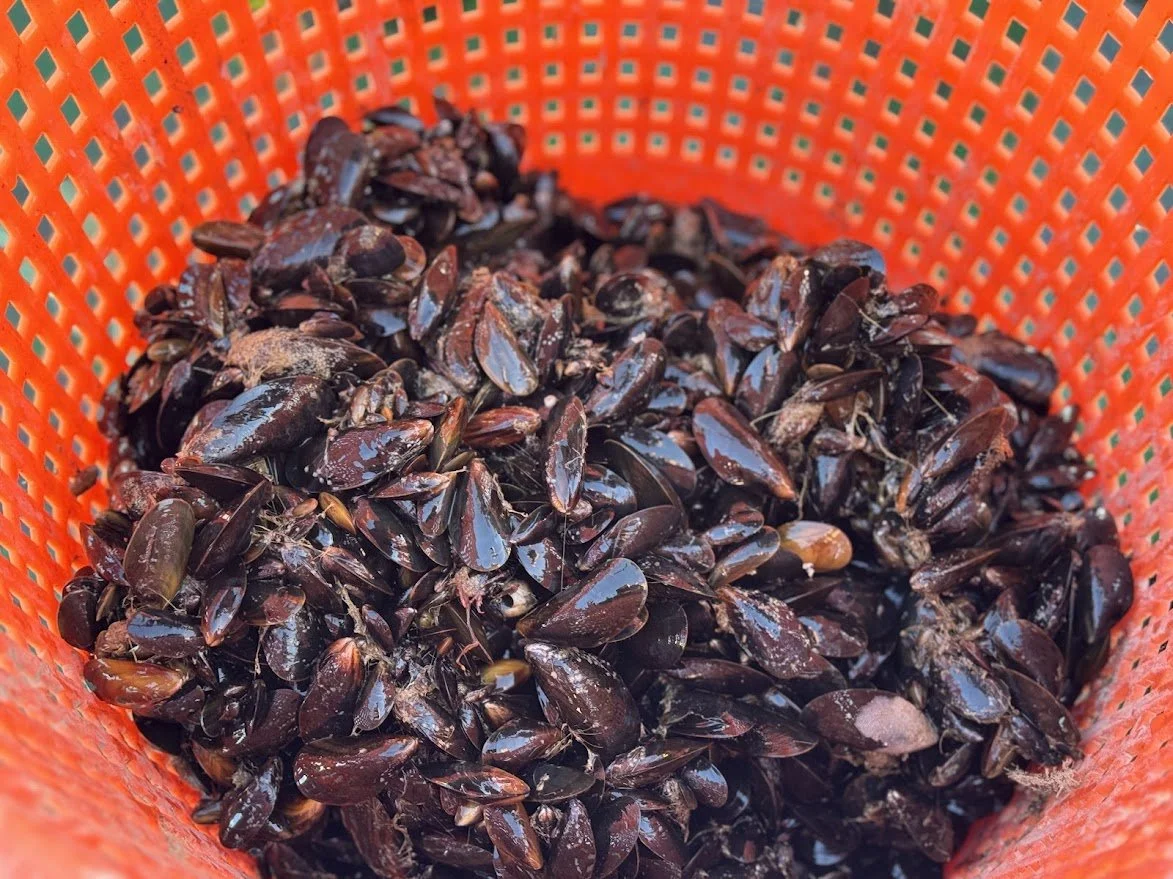
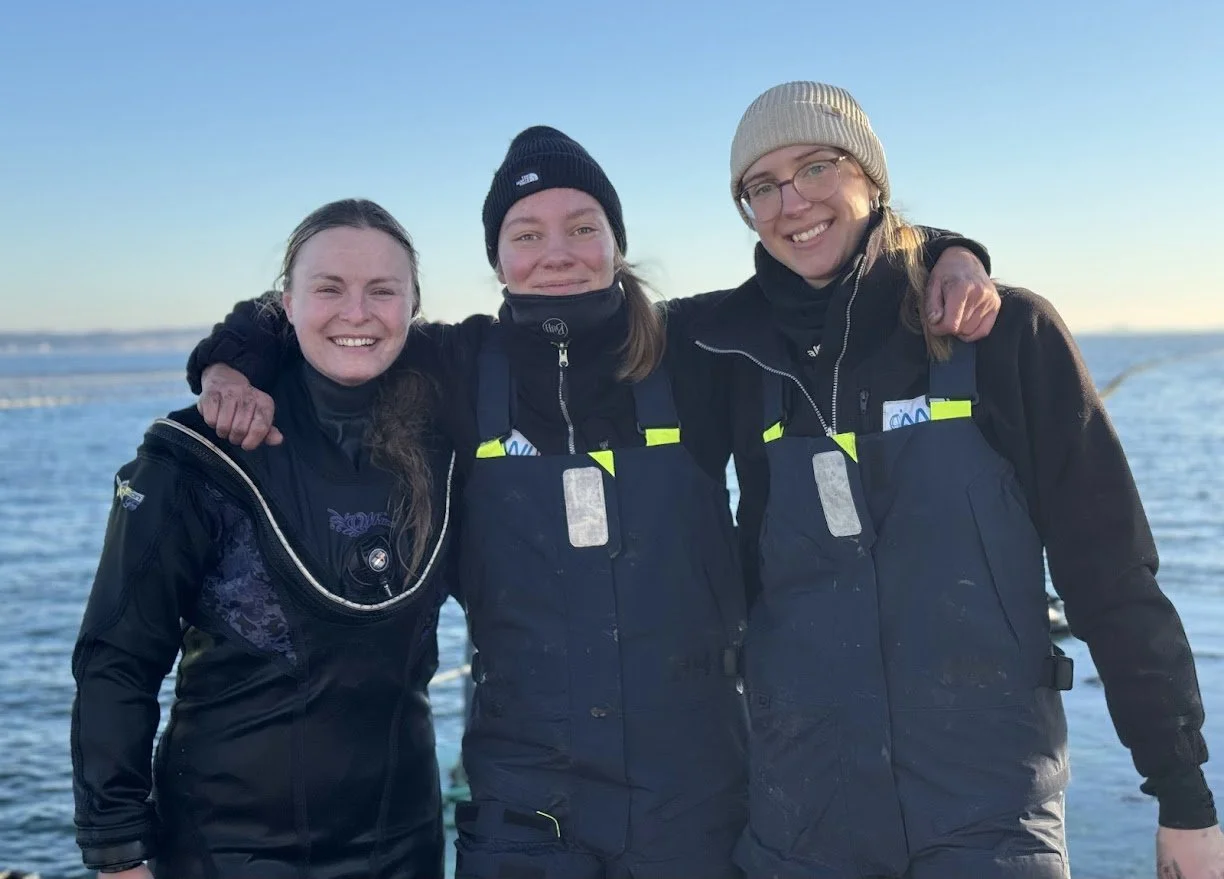
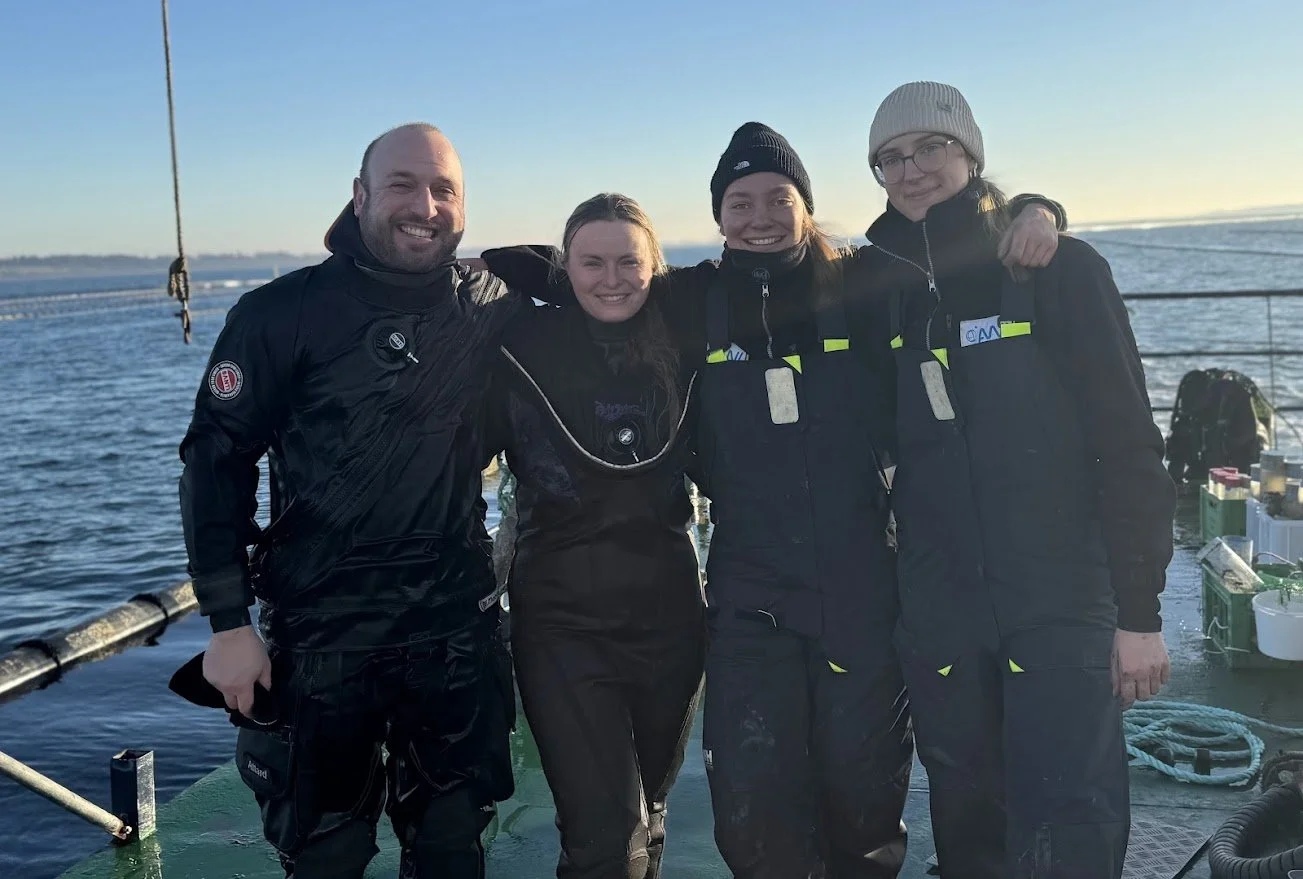
At the end of November, our team, together with colleagues from the HADAL group, completed our final seasonal sampling day of the year as part of the KUMO project in collaboration with the Technical University of Denmark (DTU). This campaign followed several others carried out across the year, all contributing to our aim of understanding how mussel farming influences the surrounding environment. A particular focus of the project is the way resuspension affects the biogeochemistry of the organic rich sediments that build up beneath farms. These sediments are highly reactive, and even brief disturbances can shift oxygen conditions, nutrient exchanges and microbial processes. To study this, the project combines laboratory experiments with in-situ monitoring using aquatic eddy covariance systems, and longer-term observations collected from mooring based sensors.
The late November campaign took place under cold but stable conditions, which allowed us to deploy an eddy covariance system and carry out substantial sediment sampling inside the mussel farm as well as at a reference location outside the farms. These samples will now be analysed in the lab to examine their biogeochemical properties and to better understand how these sediments respond to resuspension, and how this may influence the wider ecosystem around mussel farms.
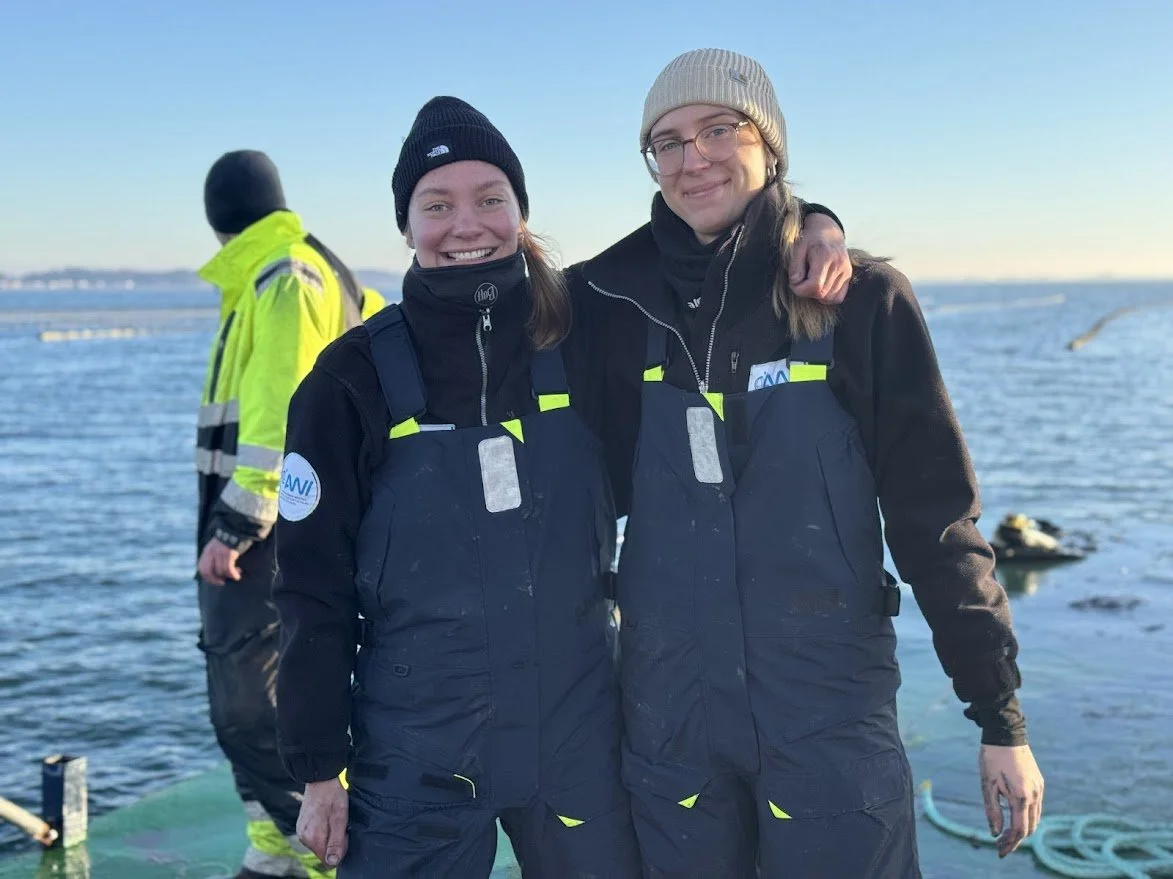
Overall, the day was considered a great success, rounding off a productive year of sampling and monitoring. With new data now coming in and laboratory analyses underway, we are looking forward to bringing the results from this campaign together with those from earlier in the year to deepen our understanding of the seasonal dynamics of these systems.